- Sep 26, 2025
Women in History Who Embody the Goddess of Love
- Jhoselyn Escobar
- 0 comments
The Goddess of Love is an ancient mystery that lives through women who feel her call. She is as old as the cosmos itself: great mother of all — and all is Love. It’s that simple. You can choose your words, and if you are reading this, an initiation is happening. All beings on this earth are made from love; we are love. Love is our natural state. Unconditional, divine love helps you understand that the love you feel for yourself is the same love you feel for the other, because we are oneness. We all come from the same seed and will fertilize the same ground. So it’s no wonder the great goddess of love has been here to guide us back into our true nature.
In tantra we say the divine lives inside us. Those words point to the fact that you are already divine — which doesn’t make you less human. Human is divine, and divine is human. We are oneness. In a perfect world we wouldn’t need this conversation because this would already be known. But sometimes our natural state is pushed away to break cycles and start anew, and then we need to return to our inner guidance — to that ancient love-goddess within. Even when we look to Venus in the sky, we are looking into our inner cosmos to find her in ourselves. Again: we are one; we are oneness. We are love.
These women in history did exactly that: they devoted themselves to their true nature, which is love. They surrendered to the deep currents of love and eros that arose in them, allowing desire to guide their lives. They created “drama” — actions that disrupted unnatural states of being. This is inspiring: to see a woman in a patriarchal culture choose to act and be exactly who she wants to be, creating ruptures in the doing. That’s hot!
Let’s start with the high priestess who was the very first author we can name: Enheduanna (23rd century BCE, Mesopotamia), daughter of Sargon of Akkad. Enheduanna served as high priestess at the moon-temple of Ur. She devoted her life to connecting with Inanna — goddess of love, fertility, sex, and the representation of Venus. Enheduanna wrote beautiful poems showing she walked the path of the priestess: a woman who embodies divine love, acting as a conduit between spiritual and material worlds. She called Inanna the “Lady of the Greatest Heart” and wrote texts where natural states — sex, passion, lust, desire, love — were seen as divine. Written in the voice of a woman claiming direct communion with the goddess, these hymns functioned as liturgy, dynastic affirmation, and an assertion of female ritual authority. Enheduanna even complained to the goddess about the hardships of the path — brave enough to put her name to her work. Her texts include the descent of Inanna to the underworld, a story that mirrors Venus’s descent and that resonates with the human journey of loss and return.
Perhaps it was thanks to her that a path was opened for Sappho.
Sappho (c. 610–c. 570 BCE), the Greek poet from Lesbos. And yes, this is where the word “lesbian” comes from. You can thank Sappho’s poetry for this. You can also thank her if you’ve been in women’s circles, called thiasos, where women practiced arts that empowered their true nature — LOVE — adoring Aphrodite in ritual. From these experiences and writings arose the “sapphic” style — which entails love between women. In my view, Sappho loved women, and why wouldn’t she? Women are the most beautiful, divine representation of nature. Her words unite divine love and carnal love; when currents of love rise in women’s circles we remember our oneness. If I love myself, the world, and other women, it’s all the same current.
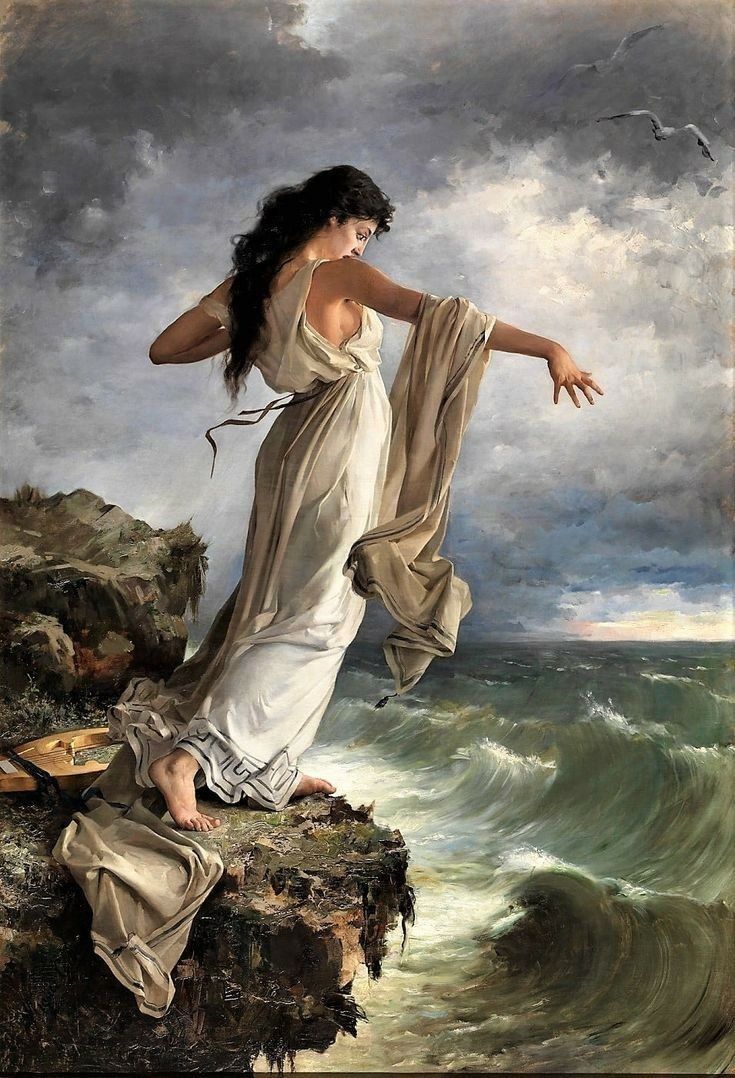
The Death of Sappho, Antoine-Jean Gros 1801.
And now we can go to one of my childhood fascinations — both mythic and magnetic — Cleopatra VII (69/70–30 BCE), the Ptolemaic queen of Egypt, the last Pharaoh (King & Queen). She deeply identified with Isis — Egyptian goddess of love, fertility, sex, and magic — devoted to her and acting as her embodiment. For her people, a ruler as the goddess of love in flesh was a sacred continuity: the woman who tended the realm was the living goddess. She was later remembered as a brilliant diplomat, patron of arts and sciences, and a powerful leader. During her time, Cleopatra was maligned by Roman narratives that reduced her to a seductress, a “sex witch!” Cleopatra made love to Julius Caesar and Mark Antony, bringing them back to life as Isis did to Osiris, and these were also seen as political liaisons; in my eyes she sought to weave sacred union and fertility across lands, as Isis herself would.
Speaking of sacred union and the alchemy of love and sex, Mary Magdalene remains vital. Born in the 1st century CE and active in Galilee and Jerusalem, she has been reinterpreted through the ages. I rejoice in modern awakenings that see her as a powerful priestess: a devotee of love, keeper of sacramental arts, and proponent of sacred union — the blending of Divine Masculine and Feminine. She was a priestess of Isis, goddess of love, and Jesus’s companion and consort, going through rituals of sacred union that raised the vibration of unconditional love. And it is still felt in our modern world. As a powerful woman in that time she was of course called a prostitute. Persecuted and maligned, her devotion persisted; and now we are finding pieces of the “Gospels of Mary” to untangle more of the mysteries of Venus and the rose lineages.
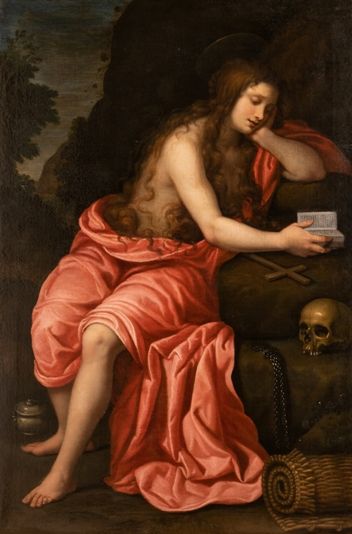
Penitent Magdalene, Francesco Morosini 17th-century.
As I write, my passion grows. I am grateful for these brave women who chose to embody the goddess of love despite enormous risks: lives, livelihoods, and reputations were often sacrificed. No wonder that when a priestess’s call is felt, doubt and rejection arise — that’s often the proof the call is real. This path is about service, not recognition.
One of my favorites, discovered during college theology class, is St. Teresa of Ávila (born March 28, 1515), whom I called femme avant-garde. She chose a life of service early and became a Carmelite nun at a time when women authors could be dangerous. Teresa reclaimed the body’s sacred role in the church: the body not dirty but a valid vehicle for sacred union. She described mystical experiences where erotic energy and eros pierced her heart — passionate union with the Divine/God. Her writings transformed a historically suspect erotic longing into a spiritual force. Teresa expanded the Carmelite order so more women could find devotion and love.
I’ve often considered becoming a nun — a life of service to love. But only if such a space celebrated the erotic, fertile nature of being. That’s what priestess temples were for.
Devotion to love can also be revolutionary passion. Manuela Sáenz (born December 27, 1797, Quito) is my personal heroine — and an Ecuadorian icon. Like Josephine to Napoleon, Manuela was the passionate consort who fueled action. She fought for liberation alongside Simón Bolívar: organizing intelligence, saving his life, and acting publicly in political spheres closed to women. Her life models erotic relationship as political praxis: intimacy used to foment liberation. But moreover you can see in her letters how much of a loving, caring, nurturing woman she was with her beloved. My admiration comes because she was able to be WHOLE: a passionate warrior who fought for freedom and a sweet, tender lover — a woman with tremendous range, true to who she was. Her natural state. Oneness. Love.
And love is what guided Mata Hari (born 1876, Leeuwarden). She, like Inanna herself, went through the door of the underworld and descent, losing everything she had, only so she could reinvent herself. The exotic dancer became a living image of eros; in times of dryness she nurtured the world with beauty, love, and eros. Movement, hip sway, adornment — a woman using her body and beauty as power. In wartime she was accused and shamed; perhaps her “crime” was loving across borders. To me, her courage and embodiment of the body’s power remain striking. She reminds us that the sacred dance of eros is not just entertainment — it is prayer in motion, a living hymn of devotion.
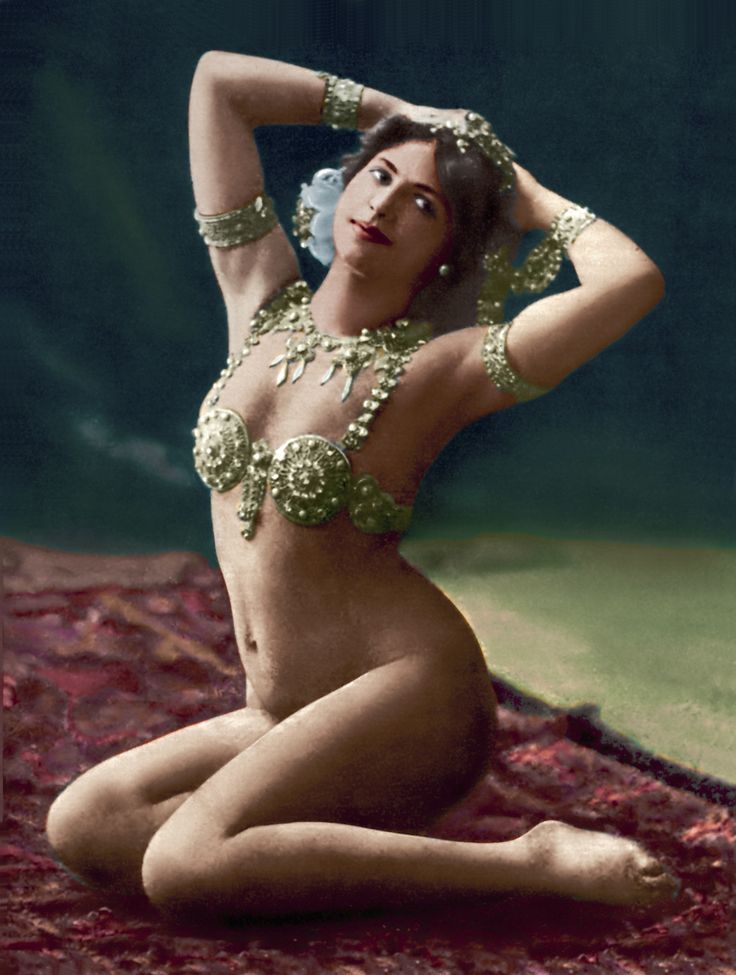
Photo taken 1920 approx. author unknown.
Finally, Marilyn Monroe (1926–1962) — once dismissed as a “dumb blonde,” now seen more complexly. She channeled Aphrodite-like power: seductive innocence, charisma, and an embodied femininity that opened doors in Hollywood. Her life also shows the dangers women face when the industry nurtures isolation rather than sisterhood. I wish Marilyn had had more sisters by her side. Still, her presence shifted culture forever — she dared to embody desire as divine, even when it cost her everything.
So here I am, hungry for more and inspired: through history there have always been women courageous enough to answer Venus’s call and devote themselves to love. No matter the sacrifices, dangers, or disruptions they caused — their legacy shapes future daughters of Gaia. I even see this trait in my mother, and how could I not, as she birthed love into this world. And so I see it in all of us. We all carry the codes of the great goddess; we can choose to be in service to love. If we rise together, perhaps we’ll set the tone for a world that remembers the natural state of oneness: LOVE.
My dearest woman, you have felt the call of the goddess herself. Let us discover her deeply together. Let’s surrender to the current of love and eros and weave them into our reality. Let us become the women we were always meant to be. Let us be complete, whole, oneness. Love.
The invitation comes from my heart: join us at The Goddess of Love Online Temple at clitoria.world.
With love,
Hija de la Tierra — Arushi Devi Jhoselyn